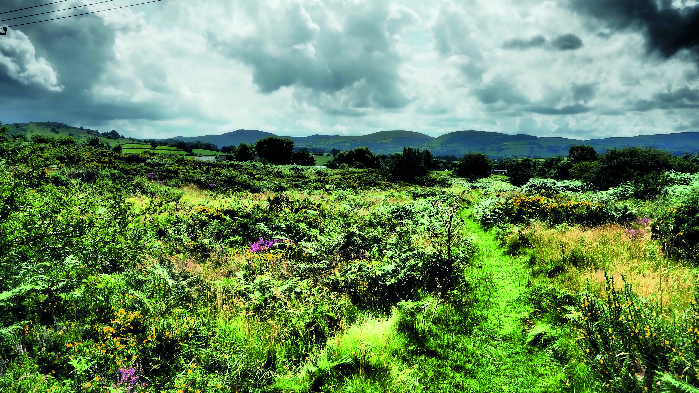
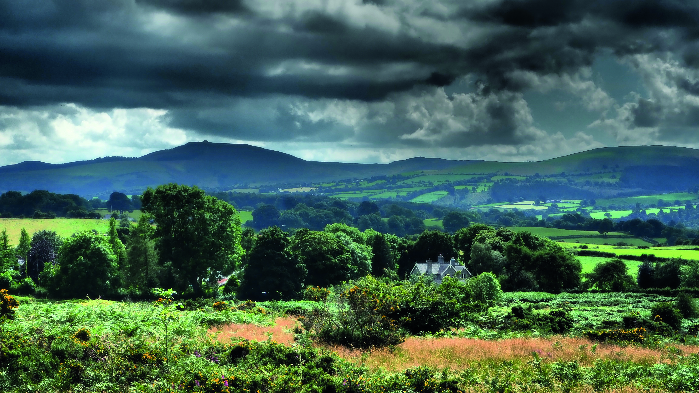
Together with a small group of enthusiastic amateur botanists, I could recently be found seeking out the wild flowers of Halkyn Mountain in Flintshire with the Clwydian Hills in the distance before us, their blue and violet outline just breaking the soft grey of a low-slung, overcast sky.
We were attending ‘The Beginners Guide to the Wildflowers of Halkyn Mountain’, an event organised by butterfly and wildflower expert Jan Miller for the Halkyn Mountain Nature Conservation Group. She began with a slide show, guiding us through some of the flower families to be found on the mountain and explaining the common characteristics of their composition in terms of leaf, stem and flower structure, and their importance as nectar sources or larval food for different species of butterflies and moths.
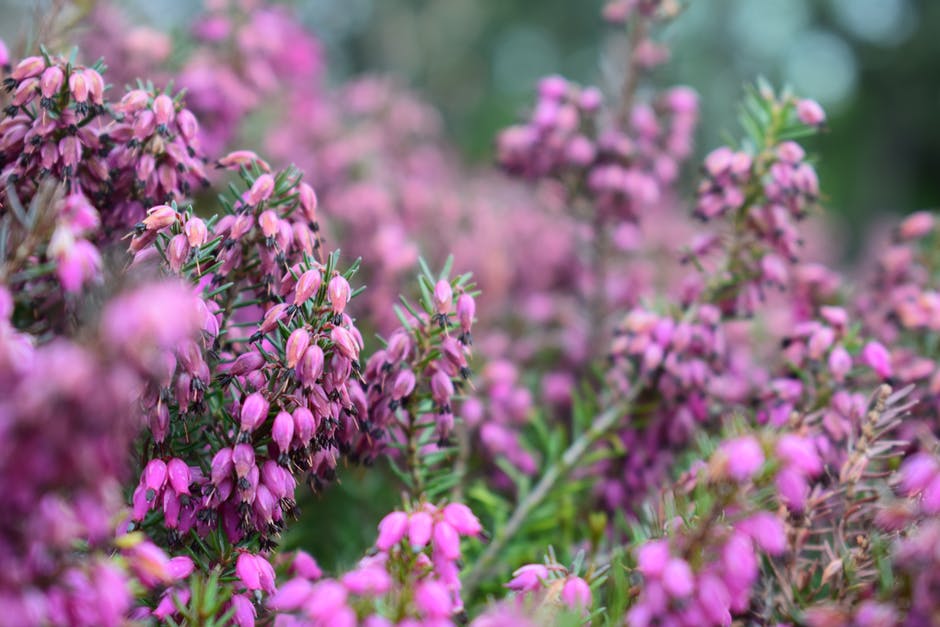
Following Jan’s presentation, we set out with our knowledgeable walk leaders, Ieuan ap Siôn and Colin Roberts, eager to see what we might discover in this curious post-industrial landscape of mine shafts, lime kilns and old quarry outcrops. Walking amongst quietly grazing sheep we set about exploring the flora of the common and I was soon absorbed with trying out my new-found knowledge and identification skills, with advice and expertise provided as needed by Colin, Ieuan and other members of the group, learning along the way that the Bell heather found growing here is the county flower of Flintshire.
Its flowers are attractive to a wide range of butterflies.
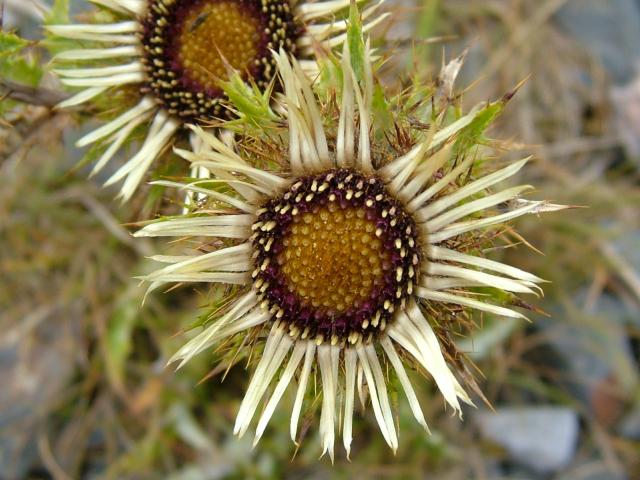
The thin, nutrient-poor soils of the common lie over varying types of rock and support a surprisingly wide range of different plants. Wild herbs such as thyme, betony and marjoram can be found growing in areas of limestone, whereas the gorse and heather which proliferate here grow on the more acidic chert and sandstone soils. There are also specialists, such as the Spring sandwort, also known as Leadwort, which have adapted to grow on lead contaminated soils that other plants cannot tolerate.
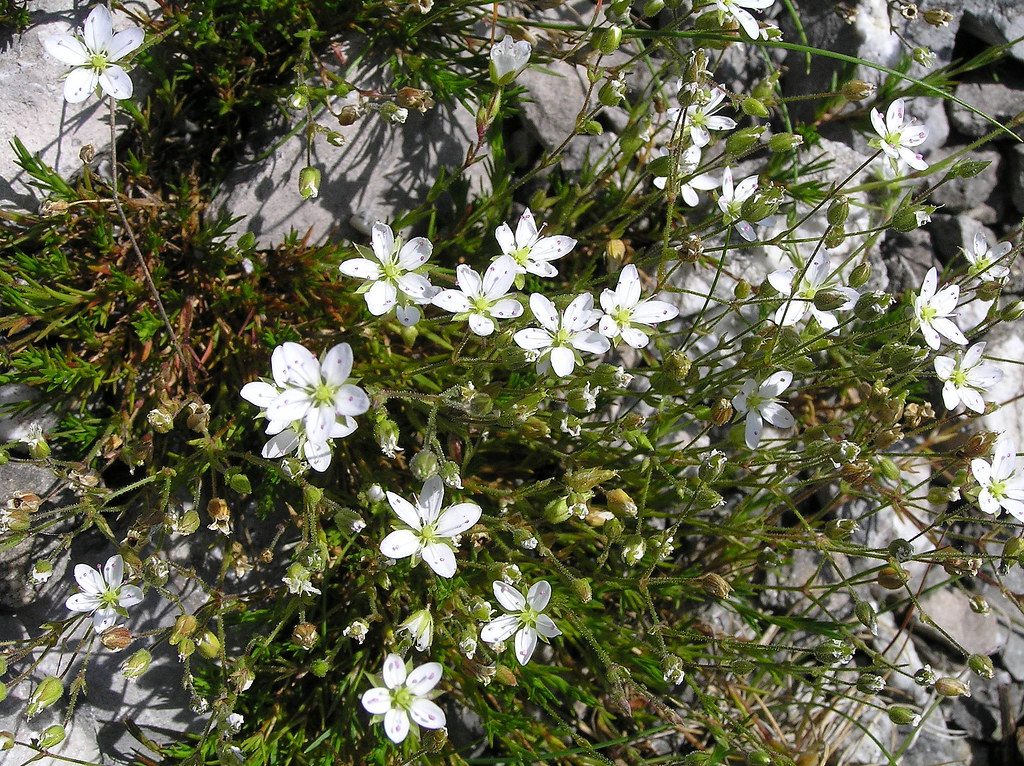
Belonging to a botanical category called ‘metallophytes’, this plant is a
specialist of soils contaminated by lead, and was used by the Romans as an
indicator for its presence
Lead mining in the area may have begun as far back as the Bronze Age, but it was the Romans who developed it extensively, transporting ore to Flint for smelting before shipping it via the Dee to Chester and beyond. Ingots of lead, known as “lead pigs” and embossed with the name of the local tribe, the Deceangli, have been found throughout the area.
After the departure of the Romans in around 410 AD, very little mining appears to have taken place until it was taken up again in medieval times. Output increased dramatically in the early 18th century however, with the introduction of gunpowder to extract the ore in greater quantities, although flooding was a constant problem. In the 19th century Cornish engines were brought in to pump out the water, with the long-term solution eventually being provided by the construction of the 10-mile Milwr Tunnel, running from Cadole to Bagillt, facilitating the drainage of around 60 miles of tunnels and passages. Production records covering the years from 1845 – 1938 show that Flintshire produced nearly 500,000 tons of lead, amounting to 10% of the UK total.
Though the last mine fell silent in 1987, the abandoned workings and a deep lake discovered during the construction of the tunnel are today the haunt of cavers and divers.
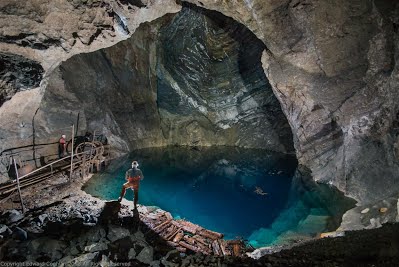
This lode was named after mine manager ‘Captain’ Edward Powell, a title commonly bestowed as a mark of respect for the post.
He is interred at Halkyn Church. Photograph: flintshireleadmining
Over the past 300 years quarrying has also played a major role in the economy of the local area. Although originally carried out by farmers and commoners working by hand using crowbars, hammers and wedges, demand for this high-quality rock increased and larger quarries eventually became established, such as the massive Pant-y-Pwll Dŵr that operates today, its impressive rock faces looming vast and grey in the landscape.
People have lived and worked on and around Halkyn Mountain for centuries, farming the land, grazing their animals and exploiting its riches, and though it remains a working environment, it is nowadays also a place of leisure and relaxation. With breath-taking views across the expanse of the Dee Estuary on one hand and the rolling hills of the Clwydian range on the other, this intriguing landscape is a compelling and fascinating mix of wild, natural beauty and industrial toil, a place where the past is never too far away.
Copyright Sonia Goulding
This is brilliant Sonia! I can’t believe I lived in Flintshire for over twenty years and never knew about all this!
Thank you Mary! There’s loads more I could have put in – there’s so much fascinating history out there!
this is lovely Sonia! Can I share it on the Halkyn Mountain Conservation Group page?
Hi Jan – I’d be delighted, thank you!
Really great, Sonia!
The role of Derbyshire miners in the history of this area is also a fascinating back-story. We know so little when there is so much to know!!
Gwen
Thank you, Gwen! Yes, I uncovered lots of interesting facts during my research, the Derbyshsire miners included. I have also come across an old book (written at the end of the 19th century) with some brilliant local info in there, so there’s definitely more to be written about!
Absolutely so Interesting and amazing, sorry still learning what is here in our Fantastic North Wales ……Fabulous Sonia X.
Thank you for your kind words, Penny!