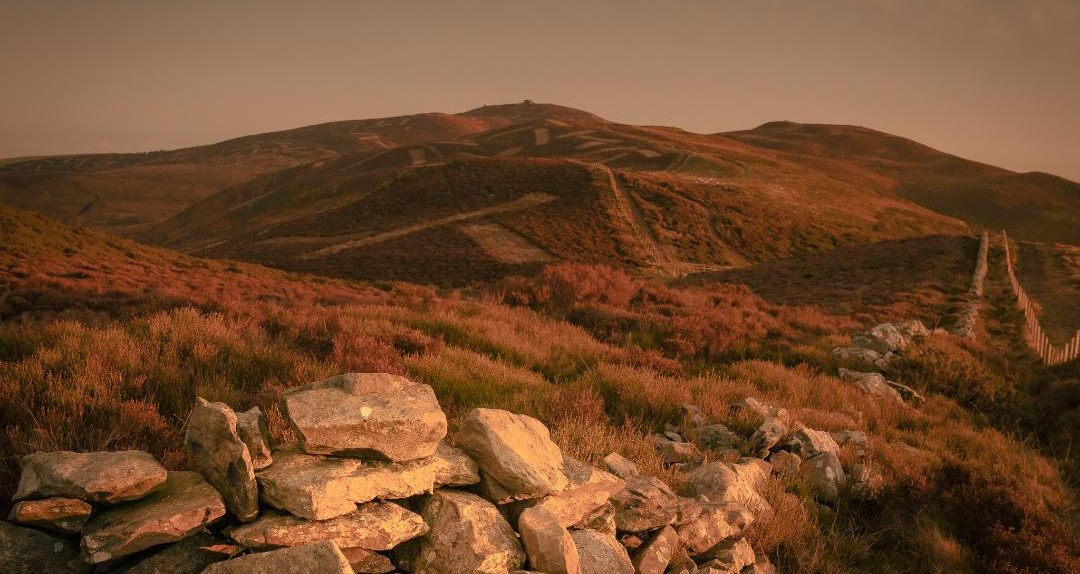
The Clwydian Range is a line of heather-clad hills rising above the verdant Vale of Clwyd. Though modest in comparison with the lofty heights of Eryri (Snowdonia), these hills have a presence entirely their own, shaped by wind, weather, and the steady rhythms of rural life. Walking here demands no heroic effort: the reward is a sense of freedom, held between the earth and a never-ending sky.
IRON AGE HILLFORTS
One of the most remarkable features of the Clwydian Range is its chain of Iron Age hillforts, an extraordinary alignment of prehistoric sites, each claiming its own rounded summit. Archaeological finds, including Bronze Age axes and Roman coins, have revealed continuous activity in this region over thousands of years. In the late 19th century, there was even a short-lived gold rush, sparked by the discovery of a gold nugget at the remains of a quarry near Moel Arthur.
Today, you can trace the circular embankments with your feet, sense the labour required to shape them, and imagine the communities that once lived and worked here. Excavations have uncovered wooden structures, hearths, tools, and pottery, offering glimpses into the everyday lives of those who occupied these hills.
MOEL FAMAU, HIGH POINT OF THE CLWYDIANS
At 554 metres, Moel Famau is the highest summit in the Clwydian Range. It is instantly recognisable from afar thanks to what is left of the Jubilee Tower, a once grand monument built in 1810 to celebrate the golden jubilee of George III. A storm in 1862 reduced much of it to ruin, its remains defining the summit we see today.
The climb to the top leads you through predominantly heather moorland, the haunt of black grouse and quietly grazing sheep. Your reward for the final stiff pull to the summit is a sweep of panoramic views, taking in the Berwyn Mountains, Eryri, the Irish Sea, and the low plains of Cheshire. On a clear day, even famous Liverpool landmarks can be seen, including the Anglican Cathedral and the Royal Liver Building.
OFFA’S DYKE PATH: A JOURNEY ALONG THE BORDER
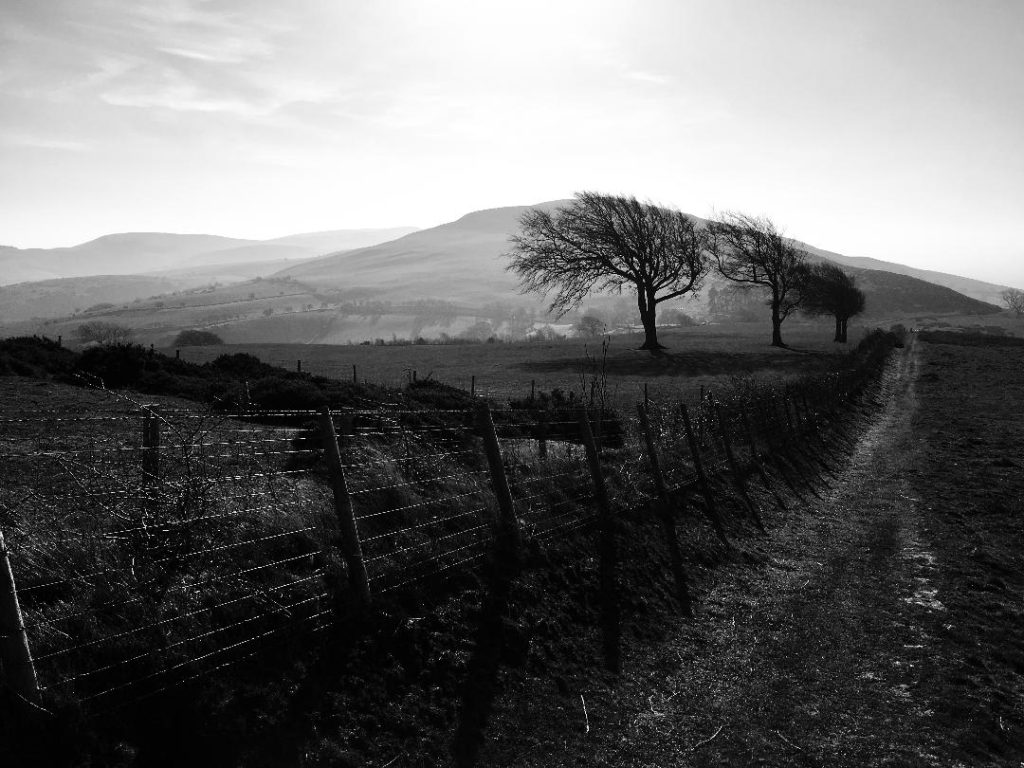
The Clwydian Range forms one of the most celebrated sections of the Offa’s Dyke long distance footpath, the 177-mile trail that follows this ancient earthwork dividing Wales and England. For many, the stretch over Moel Famau, Moel Arthur, and Penycloddiau is a highlight, a soaring ridge walk with no technical difficulty, but enormous aesthetic reward.
To walk this path is to sense the continuity of travel through the ages. Shepherds, drovers, farmers, and modern hikers alike have followed similar routes, drawn along the same elevation, and guided by the same landmarks.
THE SHIFTING SEASONS
Across the Clwydians, the shifting seasons bring transformation, each with its own character, its own rhythms, and its own wonders.
Winter
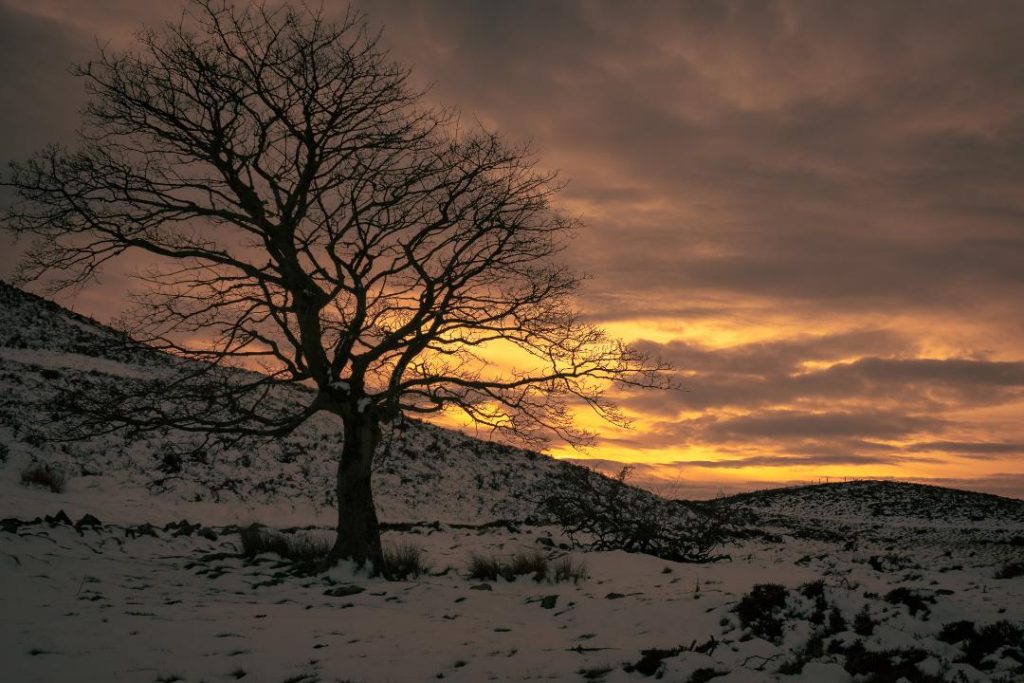
This season offers a glittering palette of white and silver. Frost lattices the land and snow covers the hills, huddling undisturbed in deep, sunless gullies. The air is sharp and biting, carrying the metallic smell of frozen earth and rusted bracken. On such days, the Clwydians feel wilder: wind sweeps across them unimpeded, and their quiet openness becomes an invitation to solitude.
Spring
Courtesy of Joel Moore
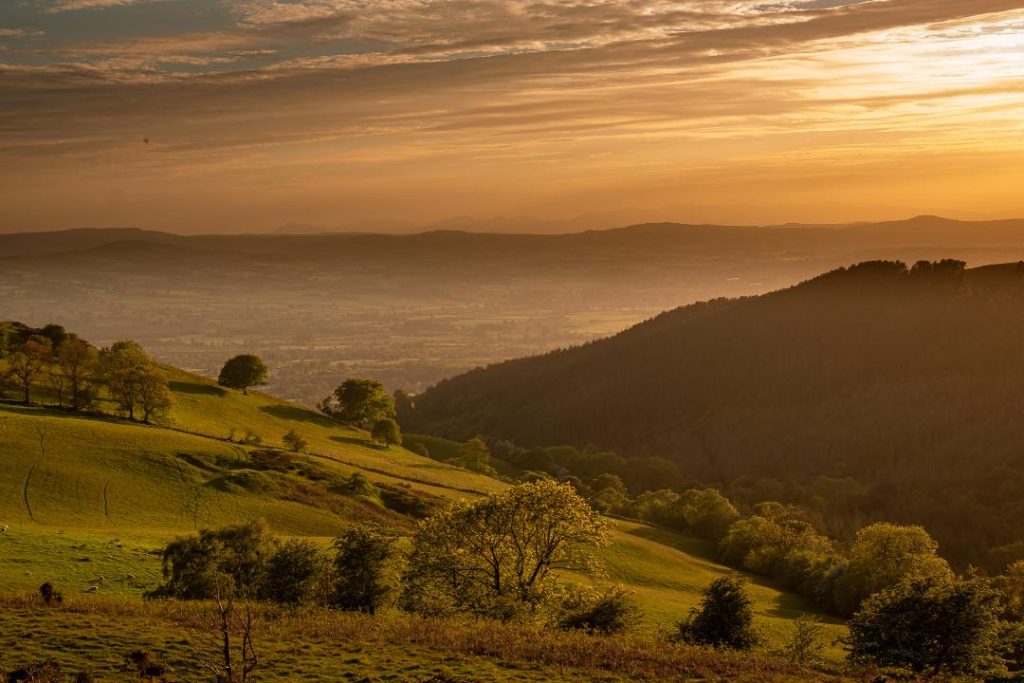
Imperceptibly at first, spring arrives on the hills. Winter loosens its hold, and streams and rivers swell with bright, clear meltwater. Warmed by the sun, the air carries the distinctive coconut scent of the golden gorse, so prolific in this area. The valley is ethereal beneath a haze of spun-gold light, and new-born lambs make their debut, watched over by their attentive, chunnering mums.
Summer
Courtesy of Joel Moore
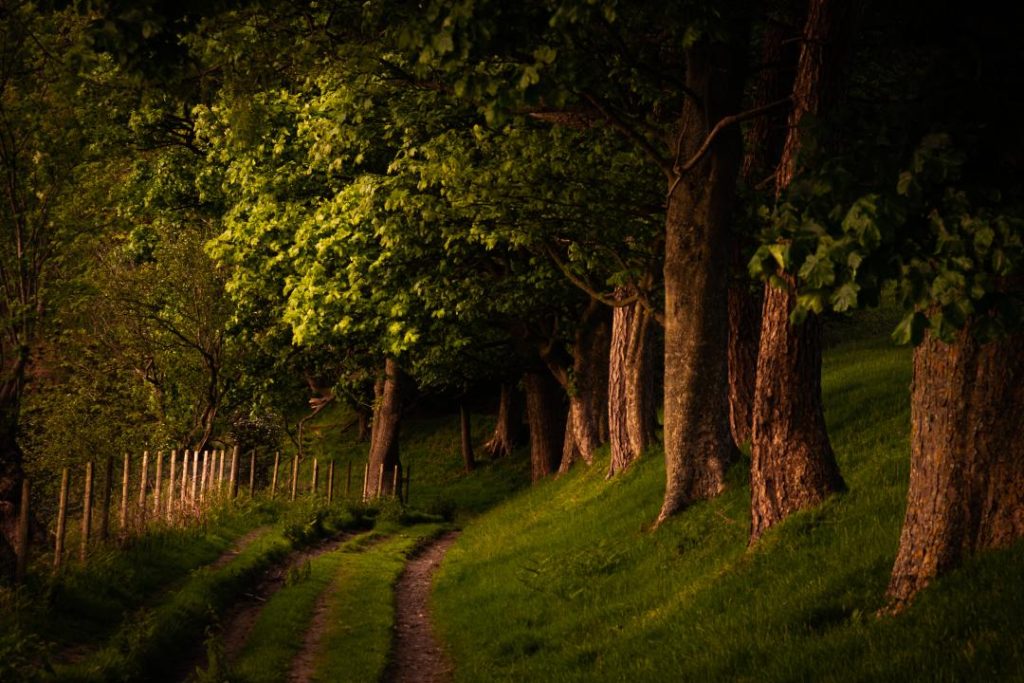
The long days of summer follow, languorous and warm. Wildflowers grow in abundance, and bees and butterflies take their fill of the feast. Later in the season, the hills take on a living mantle of purples and pinks as the bell-shaped flowers of heather begin to bloom once more across the slopes.
Autumn
Courtesy of Joel Moore
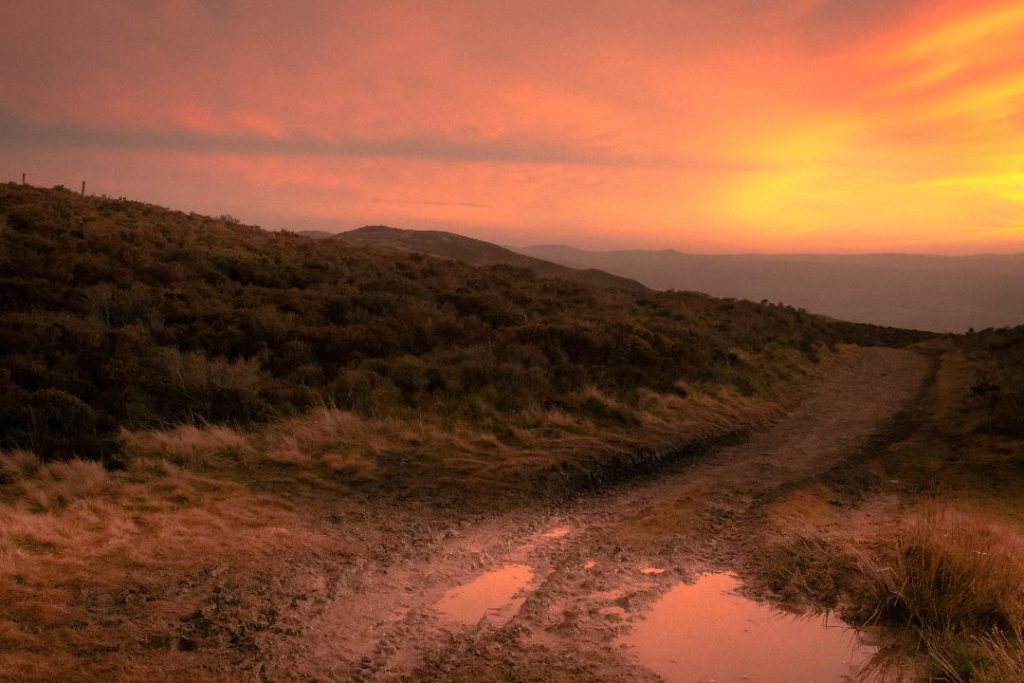
Now, the valley is busy with the harvest, and hedgerows glint with the jewel-like colours of blackberries, elderberries, and haws, ripe and ready for the picking. The breeze brings woodsmoke from scattered farmsteads and cottages, and the delicious tang of tannin and toffee apples rises from the dark, damp earth and fallen leaves.
LIFE IN THE CLWYDIAN RANGE
Cattle graze the rich pastures of the vale, heavy-footed and deliberate. Sheep range more widely, white shapes dotted across the hillsides, their grazing preventing scrub from overtaking the moorland and helping to maintain the open character of the uplands.
Below the hills, the Vale of Clwyd opens to a rich sweep of farmland and small towns and villages. Ruthin, with its handsome buildings and medieval roots, sits beneath the range, while Mold to the east acts as a cultural hub, home to the renowned Theatr Clwyd and weekly street markets. The village of Cilcain lies on the lower eastern slopes of Moel Famau, its lanes and fields shaped by centuries of hill farming. Life here continues to revolve around agriculture, the shop, church and chapel, and the White Horse pub. Llanarmon-yn-Iâl, at the southern end, centred around the ancient church of St Garmon, retains an atmosphere redolent of an older, rural Wales.
In these foothills, history feels layered: the old drovers’ roads once used to move livestock to market; the remnants of early agricultural terraces; the tumbled remains of animal enclosures. Forestry plantations patch the hillsides, and old boundary stones appear on the ridgelines, silent markers of the passing of time.
A LANDSCAPE OF QUIET DRAMA
The Clwydian Range is dramatic, though not in the challenging way of higher mountain country. The drama is subtler here, found in the quicksilver light and wind-chased clouds, in shadows folded and refolded deep into the flanks of the hills, and in the lives lived across millennia on these ridges and slopes.
To wander in the Clwydians is to enter a landscape both guileless and quietly profound, a place of shifting, mercurial moods. Whatever your reason for walking here, whatever the season, you will come away with the feeling of having travelled in the company of old stories, told and retold, beneath wide, wind-scoured skies.