Wherever I go, I find myself drawn to churchyards, not out of any morbid curiosity, but because of the stories they hold. They are places that preserve the history of local communities, written in stone and marble, each gravestone speaking of lives once lived, patterns of moss and lichen telling of years of wind and weather, quiet care and remembrance.
Amid rolling pastureland in the Denbighshire countryside lies a modest, whitewashed church, its walls greened with age and weather. A simple wheel-type bell hangs silent above the west gable. Surrounded by ancient yew trees and gnarled blackthorn bushes, the church is approached through a heavy iron gate, its hinges stiff, and slow with time. In springtime, the path to its painted wooden door leads through swathes of snowdrops and primroses. Later, the grass grows long and thick, scattered with daisies and buttercups, softening the edges of the stones. The only ornamentation in this otherwise humble building is the beautiful stained-glass window at its eastern end, where colour blooms in a kaleidoscope of jewelled glass, light and dust suspended in iridescent beams of red, blue, green, and gold.
The churchyard is alive with wildflowers, birds, insects, and the sound of wind through leaves and branches. Beyond the walls, sheep graze in open fields. We come here often, sitting awhile on one of the old chest tombs, taking in the wide views toward Mynydd Hiraethog and the distant blue outline of Eryri, the deep stillness of the land, and the sense of measured time. A stream runs through grass and stone just outside the boundary, its quiet flow bringing the soft, tumbling music of water. Here, where nature gathers, there is peace.
When loss recently entered our lives, our family began the gentle, respectful work of arranging my sister’s funeral and her resting place. In Pat’s difficult, final days, a robin came often to the garden, appearing at the patio window as if sharing our vigil. We would see him every morning when we pulled back the curtains in the pale early light, after a long night of care and worry. On the morning she passed, he appeared as usual – and then was gone. For days afterwards, it seemed, he did not return.
I wrote a poem for her service, and the robin entered those lines as a small, bright symbol of watching and waiting. Now, we have chosen her plot, her stone, and the words that will hold her memory. It will become a place of pilgrimage for us: somewhere to sit in stillness, to remember, and to feel close to her again.
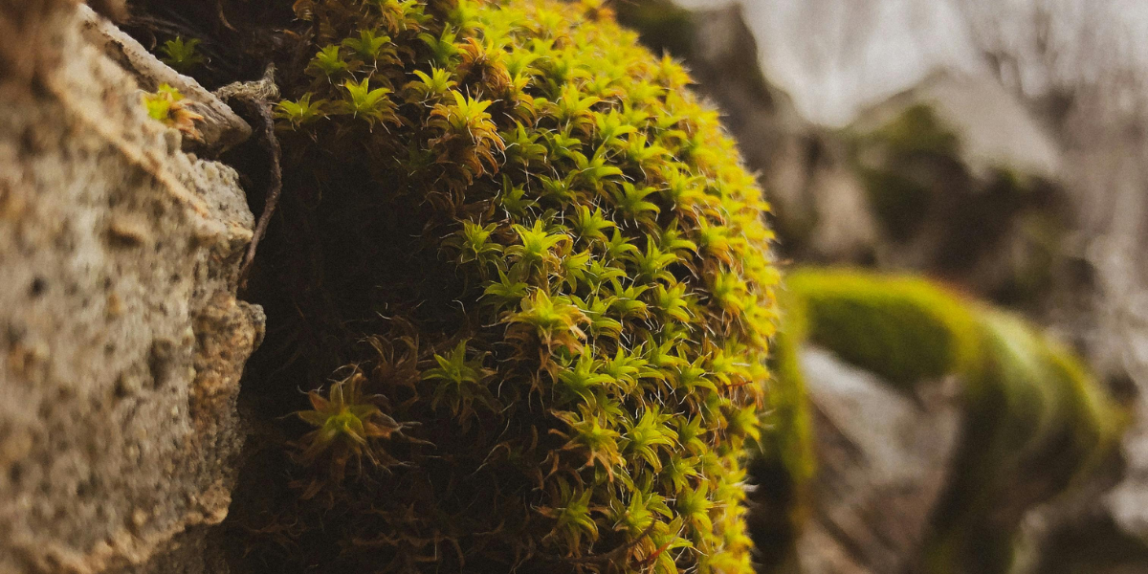
Churchyards, then, are both living archives and fragile sanctuaries, keepers of generations of names and memories, while sheltering the quiet continuities of the natural world: birds nesting in yew and hedgerow, lichens spreading in slow tapestries across bark and stone, and wildflowers springing from the earth; grief and growth sharing the same, layered ground, the brief span of a human life alongside the long, enduring patience of the natural world.
TO NATURE
So I will build my altar in the fields.
And the blue sky my fretted dome shall be,
And the sweet fragrance that the wild
flower yields,
Shall be the incense I will yield to thee…
Samuel Taylor Coleridge
© Sonia Goulding 2026